








Daniel Montoya (PhD Ecology) – Lab head

Email: daniel.montoya@bc3research.org
ORCID: 0000-0002-5521-5282
See my Google Scholar profile
AltMetrics: ImpactStory
Twitter: @Monty2Daniel I Bluesky: @danimontoya.bsky.social
Researchgate: link here
LinkedIn: link here
Keywords: Biodiversity, Ecosystem function, Stability, Ecological networks, Global change, Restoration, Agroecology
I am an Associate Editor of Journal of Animal Ecology. I am also member of the British Ecological Society and the Spanish Association of Terrestrial Ecology (AEET).
Career summary
January 2023– Ikerbasque Research Professor at the Basque Centre for Climate Change (BC3), & Ikerbasque, Basque Foundation for Science, Bilbao, Spain
January 2022- Ramón y Cajal Fellow, Basque Centre for Climate Change (BC3), Bilbao, Spain
June 2021- Research Associate at the Basque Centre for Climate Change (BC3), & Ikerbasque, Basque Foundation for Science, Bilbao, Spain
2018-2021 Postdoctoral position, Centre for Biodiversity Theory and Modelling, Theoretical and Experimental Ecology Station, CNRS Moulis – UPS, France
2015-2018 AgreenSkills Postdoctoral Fellow. Centre for Biodiversity Theory and Modelling, Theoretical and Experimental Ecology Station, CNRS Moulis – UPS & Agroécologie, INRA Dijon, France
2014-2015 Postdoctoral Research Associate, University of Bristol, United Kingdom
2012-2014 Marie Curie Fellowship, University of Bristol, United Kingdom
2010-2012 Post-Doctoral Research Fellow, University of Bristol, United Kingdom
2005-2009 PhD University of Alcala (Spain). Research placements in University California Irvine (USA), Princeton University (USA), Microsoft Research Cambridge (United Kingdom), Queen Mary College (United Kingdom)
.
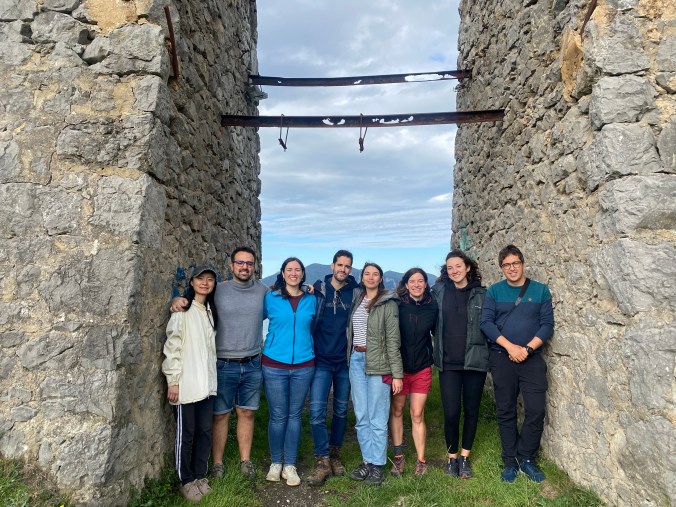
Team members (in alphabetical order)
Ana Burón Ugarte – PhD
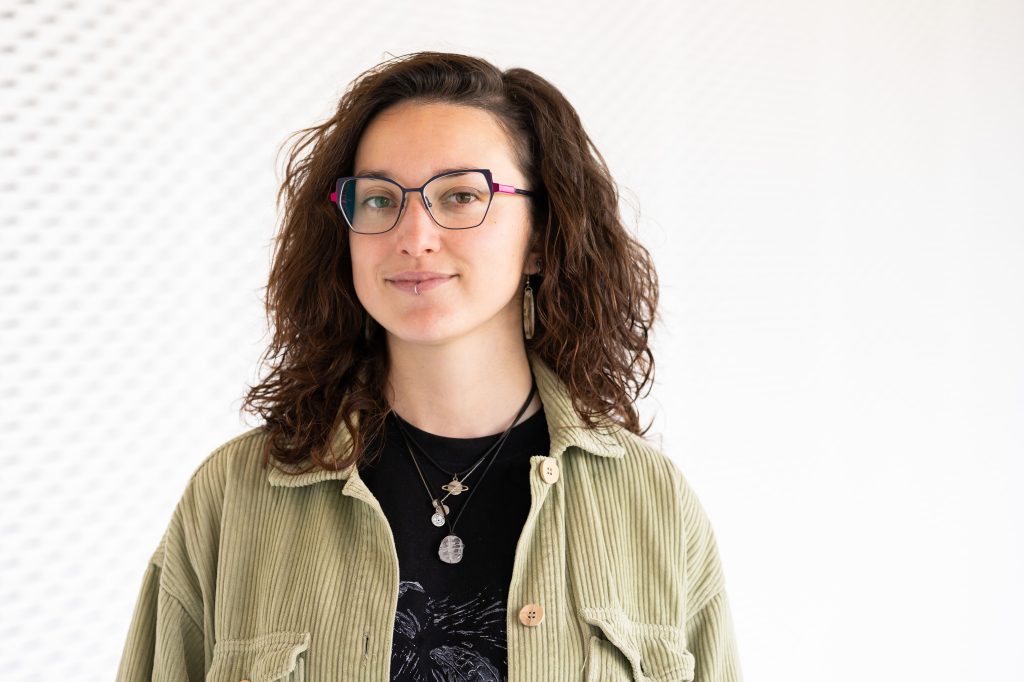
Ana Burón is currently working as a PhD student within the RECODYN project under the supervision of Daniel Montoya. The main objective of her work is to study the effects of global change on ecosystem functioning, which focuses on the system recovery dynamics after an induced disturbance and how complex multitrophic plant-invertebrate communities change and adapt. Ana completed her studies in Biology at the Complutense University of Madrid (UCM) in 2020 and her Master’s Degree in Biodiversity in 2022 at the Autonomous University of Madrid (UAM). Her area of focus was animal biodiversity, and her master’s thesis was about the cumulative effects of increasing wild deer densities on plant-pollinator networks. Two of Ana’s main interests are climate change and biodiversity conservation, and her research activity has been mainly related to insect communities. She has collaborated with the entomological collection at the National Museum of Natural Sciences of Spain (MNCN-CSIC) and has carried out surveys as a field technician within the project “Identification of climate change shelters using Iberian mountain butterflies”, also at the MNCN-CSIC. More recently, Ana did an internship at Helsinki University where she helped as a lab and field technician in the life-history evolution research group and studied the Glanville fritillary butterfly (Melitaea cinxia) metapopulation that lives in the Åland Islands. Additionally, Ana enjoys scientific dissemination. She has worked as a museum guide and environmental educator in hopes of bringing youth and families closer to the world of insects and different invertebrates, as well as highlighting their importance in the ecosystems in which they live. Her other interests include cinema and art and, in her free time, she enjoys taking photographs, painting and hiking.
Lucille Chrétien – Postdoctoral researcher

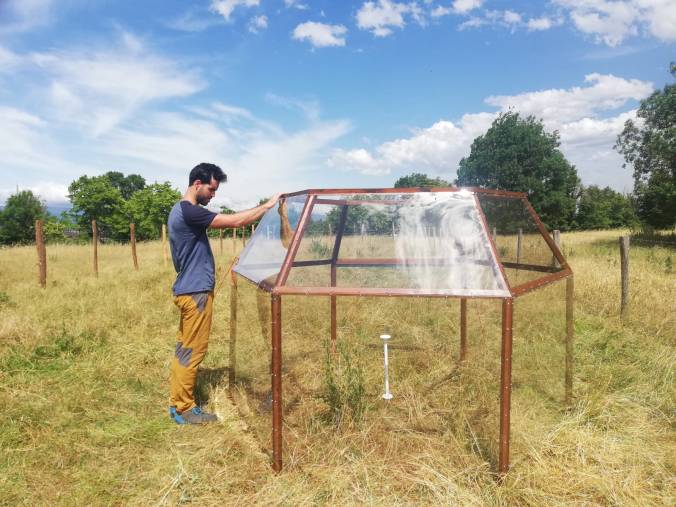
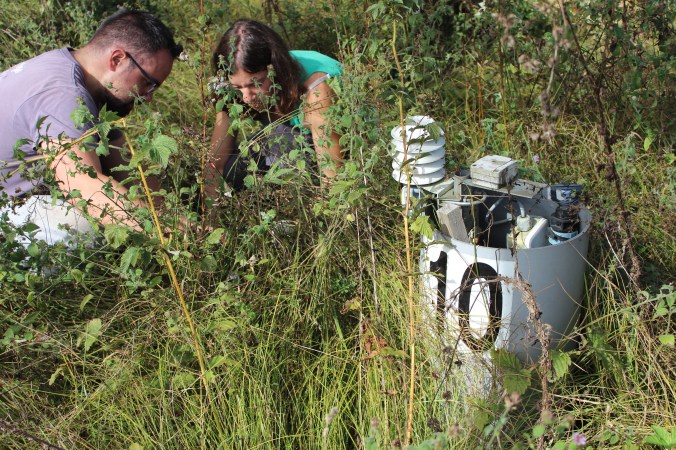
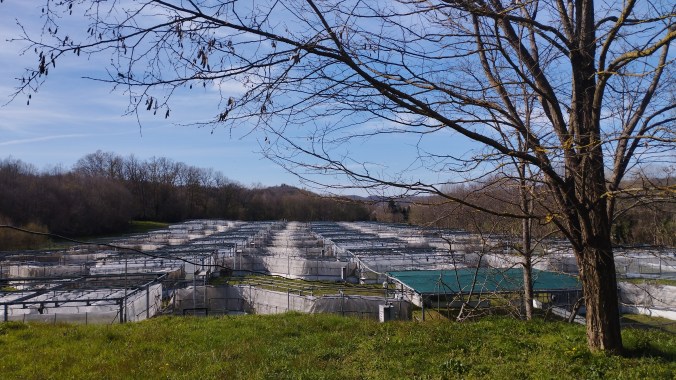
My research, so far, focused on chemical ecology of plant-invertebrate interactions. My interests lie in deepening our understanding of what affects such interactions, how they evolved, and the underlying morpho-chemical plant traits. My PhD project aimed at understanding how plants in the flowering stage balance investments between defence and reproduction. This was a collaborative project between the Laboratory of Entomology, Wageningen University and Research centre (WUR) in Wageningen, The Netherlands, and at the Insect Biology Research Institute (IRBI), University François-Rabelais in Tours, France. My first postdoctoral project then took plant defences into a broader evolutionary perspective by investigating geographical patterns in defence strategies of plants in the seedling stage. I aimed at determining whether patterns of variation in seedling resistance and tolerance corroborate established biogeographic theories about latitudinal and altitudinal variation in plant defence. This was a collaborative project between the group of Ecology and Evolution at the University of Plymouth (UoP), United-Kingdom, and the group of Molecular Interaction Ecology at the German Centre for Integrative Biodiversity Research (iDiv), Leipzig, Germany. I am currently working as a postdoctoral researcher on the ERC project “Ecosystem recovery dynamics and their responses to climate change and habitat fragmentation” (RECODYN) lead by Daniel Montoya, at the Basque Centre for Climate Change (BC3) in Leioa, Spain. This project aims at understanding the ecological mechanisms underlying ecosystem recovery dynamics and how they are affected by global change. Our experimental field work takes place at the Metatron (CNRS – SETE, Moulis, France), where we monitor plant and insect communities to analyse biodiversity, community structure, and ecosystem functioning.
Claudia Christensen-García – Senior Field & Lab technician
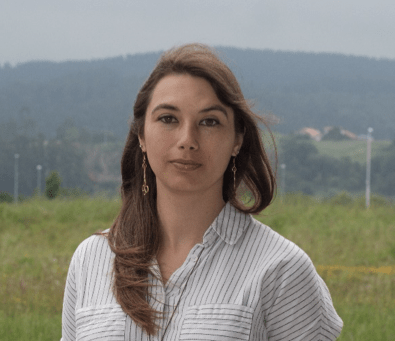
Claudia Christensen García is working as the technician on the ERC Consolidator Grant RECODYN. In 2022 she completed her MSc in Ecosystem Services at the Technical University of Dresden, Germany. Her focus area was forestry and her thesis was on Picea abies stands with Fagus sylvatica understories; specifically, she carried out a survey of forest visitors to see how visibility affects aesthetic preferences, and how this relates to forest management. Previous to her MSc, she spent six years living in Oregon, USA where she worked primarily as an environmental educator with a strong focus on equity. Her work experiences range from leading backpacking trips based from an off-the-grid community in an old growth forest, to running an advisory council for the Portland Brownfield Program. She developed curriculum on a range of topics including lichens, watersheds, and school gardens. Additionally, she has enjoyed volunteering and participating in programs such as the European Natural Forest School, Portland´s Neighbourhood Tree Stewards, Wilderness First Responder (via NOLS), as well as community science projects (amphibian surveys, salmon surveys, and swift counts). These experiences followed her BA from Boston College in Political Science (Environmental Studies, Studio Art minors) where her interest in environmental justice and the intersection of race and ecology was sparked. In her current role as Technician, her favourite aspect of fieldwork is learning new methods for insect and plant sampling. She hopes to take these lessons learned and incorporate them into nature journaling to practice botanical illustrations. She is also an avid birder and in her free time enjoys hiking, art, and reading with her morning cup of coffee.
Tânia Domingues Costa – Field & Lab technician

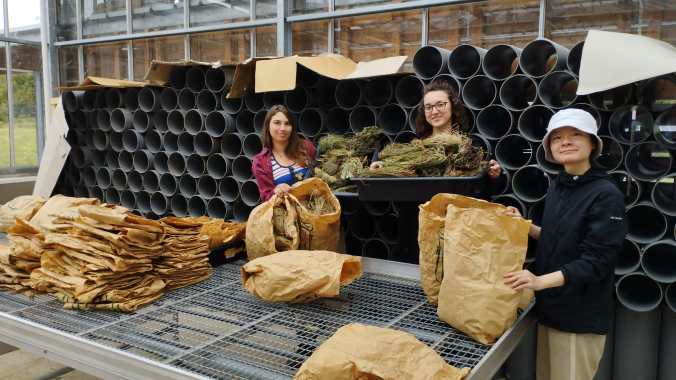
Tânia has a background in field ecology and environmental education, with hands-on experience in insect and bat monitoring, biodiversity conservation, and science outreach. She joined the Montoya Lab in 2025, bringing experience from several conservation projects across Portugal and Macaronesia, including work with nocturnal Lepidoptera and public perception studies on light pollution. She holds an MSc in Conservation Biology from the University of Lisbon and has collaborated with organizations such as SPEA/Birdlife and the University of Coimbra. In her current role, Tânia assists in managing mesocosm experiments, sampling plant and insect communities, and supporting research activities related to the RECODYN project. She is passionate about nature communication, field ecology, and creating bridges between science and society.
Rodrigo R. Granjel – Postdoctoral researcher
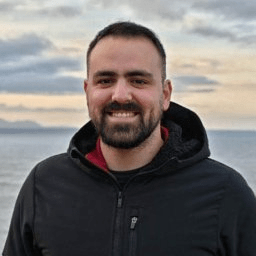
Rodrigo R. Granjel is a postdoctoral researcher at the Basque Centre for Climate Change (BC3) working on the role of species interactions on community recovery dynamics. He holds a Ph.D. from the University of Seville (2023), where he combined ecological theory and extensive empirical data to study how the interaction between abiotic (e.g., nutrient availability) and biotic (e.g., multiple species interactions) factors determine the ability of plants to coexist. His international experience includes stays at research institutions in Brazil, Sweden, Switzerland and the USA. At North Carolina State University, he was a Fulbright fellow and developed a project attempting to identify the simplest species interactions that foster the stability and functioning of phytotelmata microbial communities. Other research interests of his include biodiversity-stability relationships, chemical ecology, soil ecology, or ecosystem functioning. Beyond science, Rodrigo is an amateur photographer and racquet (or any) sports fan, among other interests.
Mark Holmes – Postdoctoral researcher
 Mark recently completed his PhD at the University of Namur (Belgium) where he worked on 1) experiments investigating the population/trait responses of phytoplankton populations/communities to environmental change and density manipulation; and 2) simulations of larger competitive communities addressing similar research questions. Prior to that, he completed his MSc in Animal Ecology at Lund University (Sweden) and BSc in Zoology at Bangor University (Wales). Within the RECODYN project, he continues to use models and simulations, now investigating 1) the effects of climate change and habitat fragmentation on meta-communities; and 2) differences in community assembly and recovery following disturbances. Outside of work – like many ecologists – he enjoys long hikes, nature photography, scuba diving, and thinking about work instead of relaxing.
Mengjiao Huang – Postdoctoral researcher
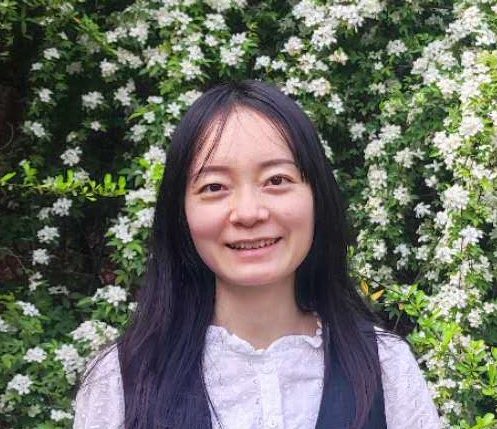
Mengjiao completed her bachelor’s degree in Ecology at the Ocean University of China (2017) and her PhD in Ecology at Fudan University in China (2023). Currently, she is a postdoc in the RECODYN project. Her research focuses on investigating the response of biodiversity to global change and its consequences on the functioning and stability of grassland ecosystems. During her PhD, Mengjiao mainly worked on manipulated experiments in an alpine meadow of the Qinghai-Tibetan Plateau in China. During that time, she focused on the mechanisms underlying the effects of biodiversity on ecosystem functioning, the effects of different global change drivers on the temporal stability of community productivity, as well as the role of trait variability in driving temporal stability in response to global change. Her work in the RECODYN project focuses on understanding recovery dynamics in experimental ecosystems after perturbations, i.e., how the recovery dynamics of functional trait diversity are affected by perturbations and climate changes, and its consequences on ecosystem stability.
Iñaki Larretxi – PhD

After completing a BSc in Biology and a MSc in Biodiversity, Function and Ecosystem Management at the University of the Basque Country, Iñaki Larretxi Gallastegi joined Daniel Montoya’s team as a predoctoral researcher granted by the Government of the Basque Country. Iñaki has always been interested in nature, particularly in the interaction between species and their environment and how this interwoven network affects the landscape. Iñaki has experience in microalgae growth, protected saproxylic coleoptera sampling, bat identification by sound and monitoring birds of prey. In addition, thanks to his master’s thesis (Effects of land use and connectivity loss in stream food webs), he has had the opportunity to delve into freshwater systems and bioinformatics. All in all, Iñaki considers himself a naturalist and always finds time for a walk in the great outdoors. In his PhD, Iñaki will use community and environmental data from the Basque Country’s rivers collected during the last four decades by the Basque Agency of Water and the Provincial Council of Gipuzkoa in order to analyse how biodiversity, community structure and ecosystem functioning have behaved. As a result, Iñaki will study the freshwater realm as an interconnected system to the terrestrial ecosystem, thus, delving into how one realm affects the other and exploring their connection. During the first year of his PhD, Iñaki will work on cleaning and analysing the data collected to understand the seasonality of the communities. In parallel, he will start to gather functional-trait data and design experimental and sampling aspects.
Andrea Lirola Jiménez – Field & Lab technician
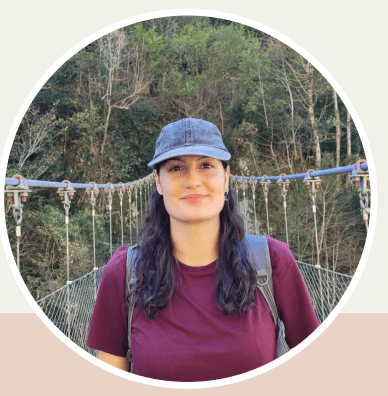
I am a biologist with experience in evolutionary biology and experimental research. I currently work as a Field Technical Assistant at the Basque Centre for Climate Change (BC3), contributing to the RECODYN project through mesocosm experiments at the Metatron (France), where we study the recovery of plant and insect communities under climate change and habitat fragmentation scenarios. Previously, I completed two years of predoctoral training at the National Museum of Natural Sciences (MNCN – CSIC) in Madrid, focusing on the evolutionary ecology of island bird populations. This included extensive fieldwork in the Canary Islands and on Guadalupe Island (Mexico), in collaboration with the Island Ecology and Conservation Group (GECI). I also have experience in science outreach, environmental education, and bird ringing at the Lorenzo García Station in Albuferas de Adra (Almería).
I hold a Master’s degree in Biodiversity in Tropical Areas and its Conservation in Madrid (CSIC-UIMP) and a Bachelor’s degree in Biology from the University of Granada. I am skilled in bioinformatics, ecological data analysis, and interdisciplinary teamwork, and I am passionate about combining fieldwork and data to better understand ecological and evolutionary processes.
Andrew Mair – PhD
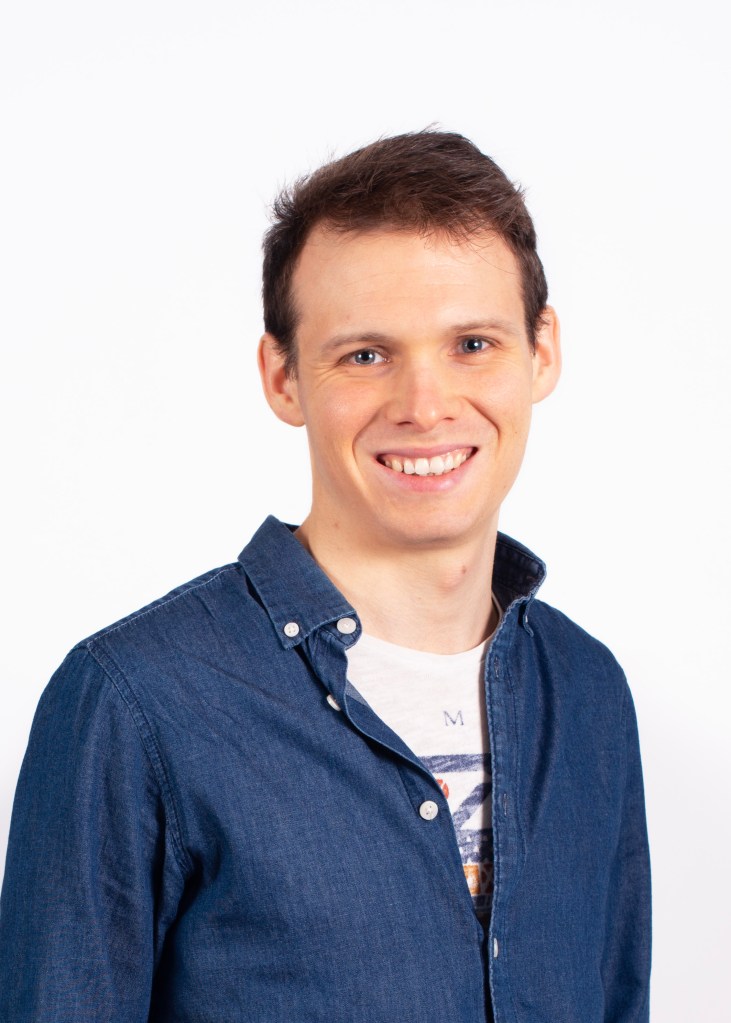
Andrew started as a postdoctoral researcher at BC3 in 2026 and is working within the TRANSFORM project. His background is in mathematics and he has a particular interest in the modelling of biological and physical systems. At BC3 his focus is on developing agroecological models that simulate crop rotations and reveal the mechanisms behind positive effects on yield and stability. Andrew has a degree in Mathematics from the University of Strathclyde and a PhD from the Maxwell Institute Graduate School, a centre for doctoral training run jointly by the University of Edinburgh and Heriot-Watt University. His PhD project focused on developing mathematical models for soil, water and plant root interactions. After finishing the PhD in 2023, he moved to Bizkaia where he then spent two and a half years as a postdoc in NEIKER. His work there involved modelling the influence of root rhizodeposits on soil hydraulics to investigate the effect on water uptake by crops. Outwith research, Andrew enjoys running, cinema and seeing friends and family.
Javier Porras – PhD
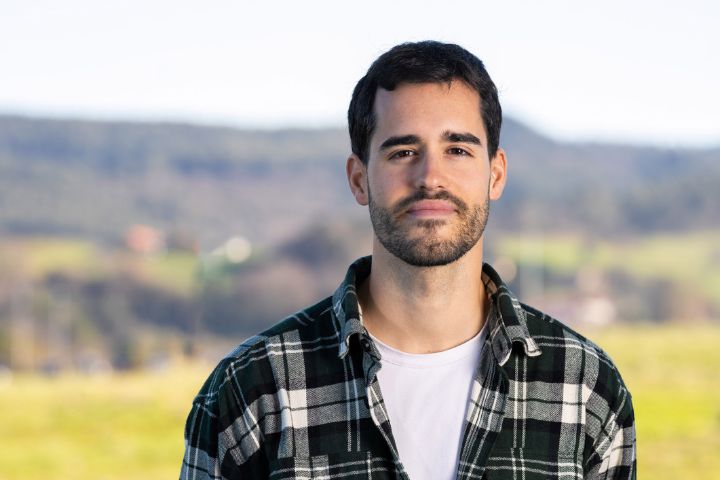
Javi’s career is not the usual one for a PhD student, beginning with his birth on a merchant ship in the waters of the Bering Sea. After completing his training in Greco-Roman philosophy, he successfully defended his MSc, titled ‘Greek philosophers and Roman gladiators: two sides of the same coin?’. At that moment, Javi decided to forget everything he had learned until then and became a nomad. Javi lived off what nature offered him, including plants, insects, and autotrophic bacteria, although he has always had a predilection for phytoplankton. This intimate contact with nature marked him forever, and is the reason that led him to do a thesis in Ecology. However, necessity has made Javi have held very varied jobs before his thesis, being an official olive emptier to fill them with anchovies previously fished by him, a toothpick sharpener, a sunflower seed peeler for bags of peeled sunflower seeds, a professional sleeper, a top model for blind people and a drying paint watcher, among others. Already during his thesis Javi has been criticised for eating the organisms he samples. “I have been and always will be a nomad”, is his response. This is why he changed his PhD topic. Javi enjoys his free time listening to music (Bertín Osborne drives him crazy), looking at the stars on rainy days, ice skating in the summer months, running marathons in his bedroom, chasing earthquakes (he is always late), and painting excellent paintings with invisible ink. Javi’s thesis is not conventional and investigates travel from a new perspective. In his own words: “There is a lot of talk about time travel, but what about space travel?” For this reason and to set an example, when Javi travels he always does so in space, whether on a skateboard, balloon or kayak. There is no doubt that Javi is unique and the whole team adores him!
Natalie Wasylyk – Administrative assistant
Natalie Wasylyk joined BC3 in 2023 as an administrative project officer. With a background in languages and teaching, she brings her communication and organizational skills to the two ERC project teams that she supports. She is currently studying Basque and holds an Honours Bachelor’s degree in Spanish and French (2013) from the University of Toronto, a Master’s degree in Spanish (2015) from the University of Ottawa, and a certificate in TESOL (2016). Her previous experience allows her to plan next steps with team members and manage the projects’ various needs. At BC3, Natalie enjoys interacting with and learning from others. She is often inspired by her colleagues’ novel ideas from fieldwork to project tasks and logistics. When it comes to nature and the environment, her interests include hiking, mushroom picking, gardening, and recycling.
Past members
Adaia Cid Alarcón – Field & Lab technician

Adaia graduated from the Autonomous University of Madrid with a degree in Biology and holds a Master’s in Conservation, Management and Restoration of Biodiversity from the University of Granada. She currently works as a field and lab technician in the RECODYN project at the Basque Centre for Climate Change (BC3), contributing to mesocosm experiments at the Metatron (CNRS–SETE, Moulis, France), where she focuses on plant and arthropod community sampling. Her background includes ecosystem monitoring and conservation work in both Mediterranean and tropical environments, with research experience at IRNAS–CSIC in Seville, the Sierra Nevada Natural Area (Granada), and fieldwork in Costa Rica (Reserva Pacuare and Cloudbridge). She is particularly interested in how land use and climate change influence ecological communities and ecosystem functioning. Outside of work, Adaia is passionate about dance, travel and hiking, and she enjoys combining science, creativity and environmental education to connect people with nature.
Laura Iglesias Anciones – Research Assistant

Laura Iglesias Anciones completed her BSc in Biology and MSc in Molecular Biology at UPV university. Her master thesis was based on the physiological and molecular temperature adaptations of freshwater cyanobacteria related to climate change. This project awakened an interest in Laura as to how different individuals and communities are affected by temperature and climate change, as well as the structure and dynamics of ecosystems. She also did an internship in Daniel Montoya’s RECODYN project; during this period, Laura gained experience in plant identification species, biomass sampling and bioinformatics analysis. Laura has always enjoyed spending time in nature doing different sports, such as rock climbing, mountaineering and backcountry skiing. Fieldwork offers her the opportunity to learn about many individuals and species while allowing her to better understand and respect the natural environment where she spends most of her free time. At present, Laura is working as a field technician in the RECODYN project. She assists in different aspects of the project, including biomass sampling, plant functional traits and data processing.
Claudia Gutiérrez – MsC

Claudia Gutiérrez did her Final Master’s Project (TFM) at the University of the Basque Country on the influence of climate change on ecosystem restoration under Daniel Montoya’s supervision. Her interests include restoration and ecology and anything that has to do with ethology. Regarding her previous projects, she completed her Undergraduate Degree Project (TFG), “Effect of habitat on parasitic infections of reptiles”, at the Complutense University of Madrid in the Department of Biodiversity, Ecology and Evolution. As a guest researcher at BC3, Claudia’s goal is to learn more about ecology and learn more about the company and working as a researcher. She assisted in the Arkaute project alongside Daniel Montoya, Javier Porras, and Laura Iglesias Anciones.
.
Main collaborators
-
- Jane Memmott, University of Bristol, United Kingdom
-
- David Moreno-Mateos, University of Oxford, United Kingdom
-
- Ainhoa Magrach, Basque Center for Climate Change (BC3), Spain
-
- Jose M Montoya, Station d’Ecologie Théorique Et Expérimentale (SETE), CNRS, Moulis, France
-
- Michel Loreau, Station d’Ecologie Théorique Et Expérimentale (SETE), CNRS, Moulis, France
-
- Jason Tylianakis, University of Canterbury, Christchurch, New Zealand
-
- Aitor Larrañaga, University of the Basque Country, Leioa, Spain
-
- Bart Haegeman, Laboratoire d’Océanographie Microbienne, Banyuls-sur-Mer, France
-
- Lur Epelde, Neiker, Derio, Spain
 Basic & Applied Ecology Lab