Scientific papers

In preparation / Under review
Synodinos, A., Haegeman, B., Montoya, D., Sentis, A., Montoya, J.M. Effects of temperature and dispersal on trophic metacommunities.
Bestion, E., Alvarez-Codesal, S., Blanchet, S. Cellamare, M., Faillace, C.A., Garreau, A., Haegeman, B., Leitao, M., Montoya, D., Richard, M., Synodinos, A.D. & Montoya, J.M. Fragmentation has larger effects on phytoplankton biodiversity than warming across spatial scales in a mesocosm experiment.
Mrazova, A. et al (Montoya, D. as mid-author). On disentangling major plant defence theories along large-scale productivity gradients.
Porras-Gómez, J., Magrach, A., Epelde, L., Granjel, R., Huang, M., Martin, P. A., Iglesias-Anciones, L. & Montoya, D. Experimental warming delays ecosystem recovery in grasslands.
Resasco, J. et al (Montoya, D. as mid-author). Climate change effects on plant–pollinator networks across continents.
Montoya, D. et al. Network Ecology: The Road Ahead.
Published/Accepted
42. Huang, M., Granjel, R. R., Montoya, D., Xiao, Y., Liu, X. & Hautier, Y. (2026). Plant diversity within communities, not among them, stabilizes grassland productivity across spatial scales. Nature Communications 17, 2145 Link

41. Allen-Perkins, A., Artamendi, Montoya, D., M., Rubio, E. & Magrach, A. (2025). Untangling the plant reproductive success of changing community composition and pollinator foraging choices. Ecography 2025, 6: e07240 Link
.
40. Montoya, D., Burón-Ugarte, A., Chrétien, L.T.S., Christensen García, C., Granjel, R.R., Holmes, M., Huang, M., Iglesias-Anciones, L., Larretxi-Gallastegi, I. & Porras-Gómez, J. Complexity and interpretability in global change ecology (2025). PLOS Climate 4(3): e0000587 Link

39. Montoya, D., Rastelli, E., Casotti, R., Manna, V., Trano, A. C., Balestra, C., Santinelli, C., Saggiomo, M., Sansone, C., Corinaldesi, C., Montoya, J.M. & Brunet, C. Microplastics alter the functioning of marine microbial ecosystems (2024). Ecology & Evolution 14(11): e70041 Link
.
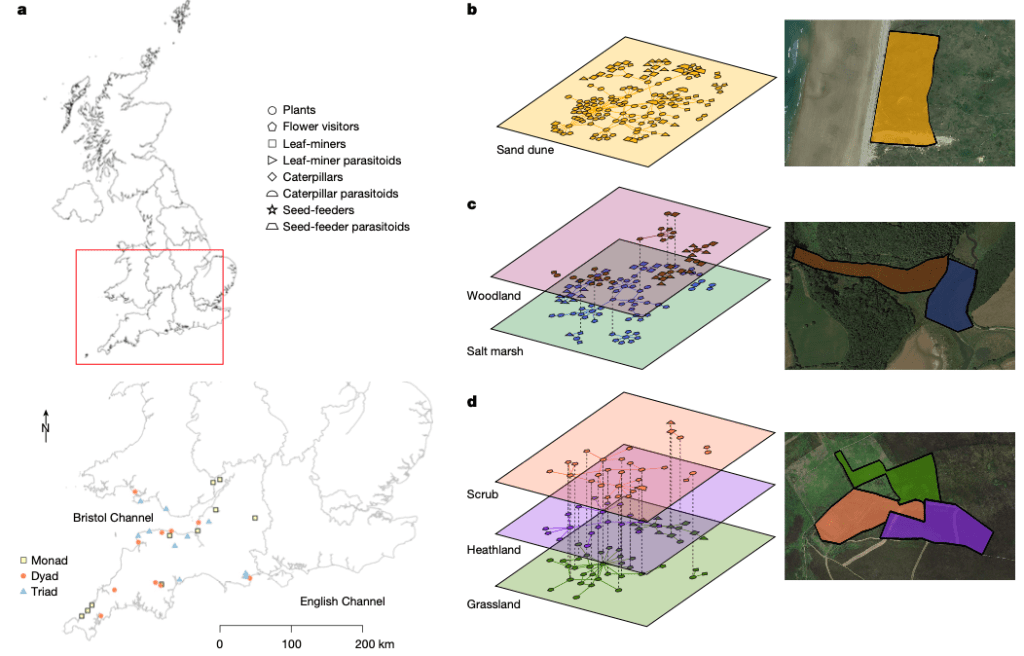
38. Hackett T. D., Sauve A. M. C., Maia, K. P., Montoya, D., Davies, N., Archer, R., Potts S., Tylianakis, J. M., Vaughan I. & Memmott J. (2024). Multi-habitat landscapes are more diverse and stable with improved function. Nature 633: 114–119 Link
.
.
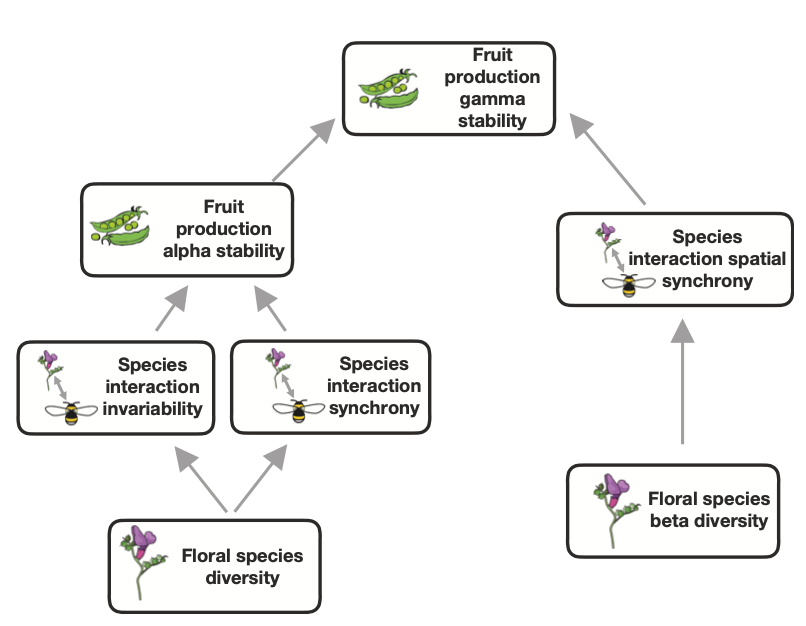
37. Magrach, A. & Montoya, D. (2024). Stability in plant and pollinator communities across organizational scales: present, gaps, and future. Special Issue: Floral Ecology, Genetics, and Evolution in an unprecedentedly fast changing world. AoB Plants: plae026 Link
.

36. Montoya, D. (2023). Variation in diversity-function relationships can be explained by species interactions. Journal of Animal Ecology 92(2): 226-228 Link
.
35. Montoya D. and De Jong M. (2023). Warming-induced range expansion effects on the diversity and composition of the gut microbiome: a case study with two butterflies. bioRxiv Link

34. Galiana, N., Lurgi, M., Bastazini, V.A.G., Bosch, J., Cagnolo, L., Cazelles, K., Claramunt-López, B., Emer, C., Fortin, M.-J., Grass, I., Hernández-Castellano, C., Jauker, F., Leroux, S.J., McCann, K., McLeod, A.M., Montoya, D., Mulder, C., Osorio-Canadas, S., Reverté, S., Rodrigo, A., Steffan-Dewenter, I., Traveset, A., Valverde, S., Vázquez, D.P., Wood, S.A., Gravel, D., Roslin, T., Thuiller, W. and Montoya, J.M. (2022). Ecological network complexity scales with area. Nature Ecology & Evolution 6: 307-314 Link
33. Montoya D. (2021). The impacts of climate change: From a butterfly’s microbiome to food security. Journal of Animal Ecology (blog series about UN Climate Change Conference – COP26) Link

32. Montoya D. (2021). Challenges and directions towards a general theory of ecological recovery dynamics: a metacommunity perspective. One Earth 4(8): 1083-1094 Link
.
.

31. Montoya D., Haegeman B., Gaba, S., De Mazancourt, C. & Loreau, M. (2021). Habitat fragmentation and food security in crop pollination systems. Journal of Ecology 109(8): 2991-3006 Link
.
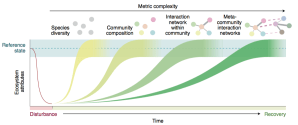
30. Moreno-Mateos, D., Alberdi, A., Mörrien, E., van der Putten, W., Rodríguez-Uña, A., Montoya, D. (2020). The long-term restoration of ecosystem complexity. Nature Ecology & Evolution 4: 676–685 Link
.
.

29. Montoya, D., Gaba, S., de Mazancourt, C., Bretagnolle, V. & Loreau, M. (2020). Reconciling biodiversity conservation, food production and farmers’ demand in agricultural landscapes. Ecological Modelling 416: 108889 Link
.

28. Hackett, T., Sauve, A., Davies, N., Montoya, D., Tylianakis, J. & Memmott, J. (2019). Reshaping our understanding of species’ roles in landscape-scale networks. Ecology Letters 22(9): 1367-1377 Link
.

27. Montoya, D. (2019). The restoration of ecological networks: Spatial and temporal scales, stability and global change. Special issue on Restoring interactions. Ecosistemas 28(2): 11-19 Link
.

26. McWilliams, C., Lurgi, M., Montoya, J.M., Sauve, A. & Montoya, D. (2019). The stability of multitrophic communities under habitat loss. Nature Communications 10: 2322 Link
.
25. Jones H. P., Jones P.C., Barbier E.B., Blackburn R.C., Rey Benayas J.M., Holl K.D., McCrackin M., Meli P., Montoya D. & Moreno-Mateos D. (2019). We agree with Larkin et al. 2019: restoration is context specific. Proceeding of the Royal Society of London B 286: 20191179 Link
.
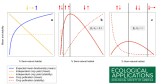
24. Montoya D., Haegeman B., Gaba S., De Mazancourt, C., Bretagnolle V. & Loreau M. (2019). Trade-offs in provisioning and stability of ecosystem services in agroecosystems. Ecological Applications 29(2): e01853 Link
.

23. Jones H. P., Jones P.C., Barbier E.B., Blackburn R.C., Rey Benayas J.M., Holl K.D., McCrackin M., Meli P., Montoya D. & Moreno-Mateos D. (2018). Restoration and repair of Earth’s damaged ecosystems. Proceeding of the Royal Society of London B 285: 20172577 Link
.
22. Montoya D., Haegeman B., Gaba S., De Mazancourt, C., Bretagnolle V. & Loreau M. (2018). Trade-offs in provisioning and stability of multiple ecosystem services in agroecosystems. bioRxiv

21. Meli P., Holl K.D., Rey-Benayas J.M., Jones H.J., Jones P.C., Montoya D., Moreno-Mateos D. (2017). A global review of past land use, climate, and active vs. passive restoration effects on forest recovery. PLoS ONE 12(2): e0171368 Link
.
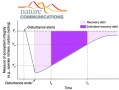
20. Moreno-Mateos D., Barbier E.B., Jones P.C., Jones .P., Aronson J., López-López J.A., McCrackin M.L.,Meli P., Montoya D. & Rey-Benayas J.M. (2017). Anthropogenic ecosystem disturbance and the recovery debt. Nature Communications 8:14163 Link
.

19. Emer C., Memmott J., Vaughan I.P., Montoya D. & Tylianakis J.M. (2016). Species roles in plant–pollinator communities are conserved across native and alien ranges. Diversity & Distributions 22, 841-852 Link

18. Lurgi M., Montoya D. & Montoya J.M. (2016) The role of space and diversity of interaction types on the stability of complex ecological networks. Special Issue: Theory of Food Webs. Theoretical Ecology 9, 3-13 Link

17. Ribeiro F., Montoya D., Furtado R., Memmott J. Pizo, M.A. & Rodrigues R.R. (2015). The restoration of tropical seed dispersal networks. Restoration Ecology 23, 852-860 Link
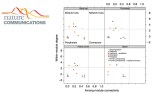
16. Montoya D., Yallop M.L. & Memmott J. (2015). Functional group diversity increases with modularity in complex food webs. Nature Communications 6:7379 Link
.

15. Russo L., Memmott J., Montoya D., Shea K. & Buckley Y.M. (2014). Patterns of introduced species interactions affect multiple aspects of network structure in plant-pollinator communities. Ecology 95, 2953-2963 Link
.

14. Nenzen H., Montoya D. & Varela S. (2014). The impact of 850,000 years of climate changes on the structure and dynamics of mammal food webs. PLoS ONE 9(9): e106651 Link
.
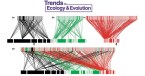
13. Montoya D., Rogers L. & Memmott, J. (2012). Emerging perspectives in the restoration of biodiversity-based ecosystem services. Trends in Ecology and Evolution 27, 666-672 Link
.
12. Alburqueque, F.S. Olalla-Tárraga M.A., Montoya D. & Rodríguez M.A. (2011). Environmental determinants of woody and herb plant species richness patterns in Great Britain. Ecoscience 18, 394-401 Link
.

11. Montoya D. Alburquerque F.S., Rueda M. & Rodríguez M.A. (2010). Species response patterns to habitat fragmentation: do trees support the extinction threshold hypothesis? Oikos 119,1335-1343 Link
.
10. Montoya D., Purves D.W., Urbieta I.R. & Zavala M.A. (2009). Do Species Distribution Models explain spatial structure within tree species ranges? Global Ecology & Biogeography 18, 662-673 Link
.
9. Montoya D. (2009). Resistencia a la deforestación. Los beneficios de la dispersión de semillas por animales. Revista Investigación y Ciencia 390, 12-13 Link
8. Bini L.M et al (Montoya as mid author) (2009). Coefficient shifts in geographical ecology: an empirical evaluation of spatial and non-spatial regression. Ecography 32, 1-12 Link
.
7. Montoya D. (2008). Habitat loss, dispersal, and the probability of extinction of tree species. Communicative & Integrative Biology 1:2, 146-147 Link
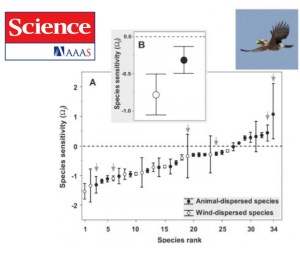
6. Montoya D., Zavala M. A., Rodríguez M. A. & Purves D. W. (2008). Animal versus wind dispersal and the robustness of tree species to deforestation. Science 320, 1502-1504 Link
.

5. Montoya D., Rodríguez M. A., Zavala M. A., Hawkins B. A. (2007). Contemporary richness of Holarctic trees and the historical pattern of glacial retreat. Ecography 30, 173-182 Link
.

4. Hawkins B.A. et al (Montoya as mid author) (2007). A global evaluation of Metabolic Theory as an explanation for terrestrial species richness gradients. Ecology 88, 1877-1888 Link
.
3. Hawkins B. A., Montoya D., Rodríguez M. A., Olalla-Tárraga M. A. & Zavala M. A. (2007). Global models for predicting woody plant richness from climate: comment. Ecology 88, 255-259 Link
.
Book chapters and monographs
2. Zavala M. A., Montoya D., Benito-Garzon M. & Purves D. W. (2011). Principales determinantes de la distribución de las especies forestales ibéricas a diferentes escalas: efectos potenciales del cambio climático. In La evolución del paisaje vegetal y el uso del fuego en la cordillera Cantábrica (Ezquerra, F.J. & Rey, E., Coord., Junta de Castilla y León) Link
1. Lomas P. L., Martin, B., Louit, C., Montoya, D., Montes, C. & Alvarez, S. (2005). Guía práctica para la valoración económica de los bienes y servicios ambientales de los ecosistemas. Fundación Interuniversitaria González Bernáldez Link
 Basic & Applied Ecology Lab